
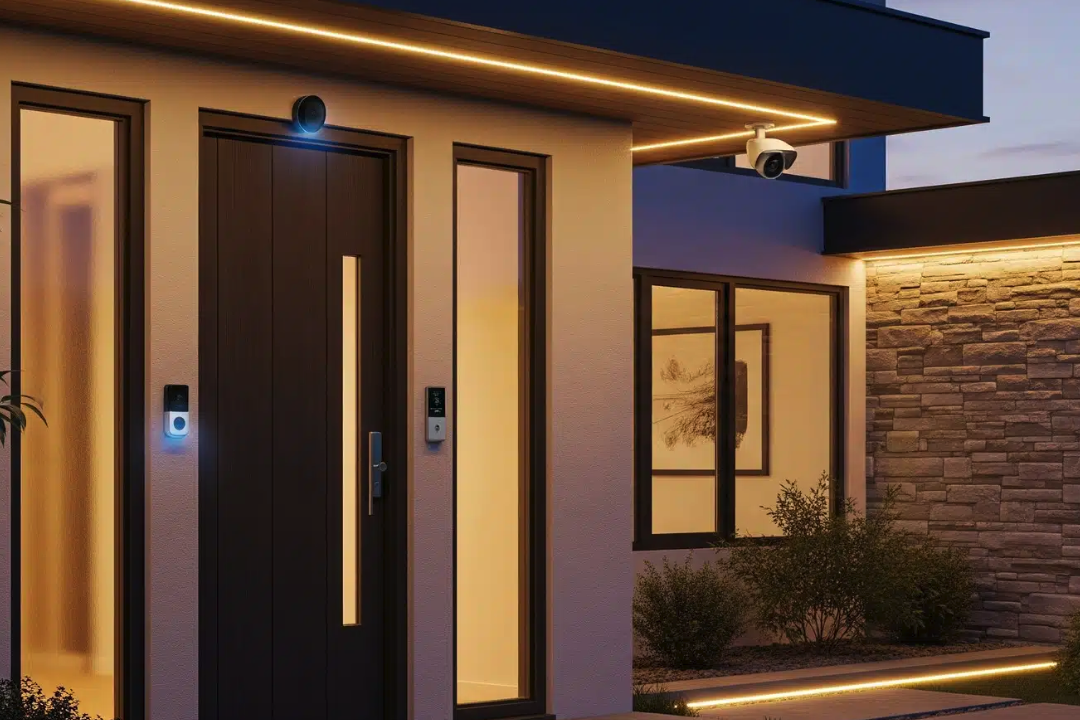
Worried about what lurks in the shadows near your front door? Automatic entryway lights are a seriously effective, yet often overlooked, way to boost your home’s security. Simply put, they make your home a less appealing target for anyone with ill intentions. When a light suddenly floods an area, it eliminates hiding spots and makes potential intruders feel exposed, which is usually enough to send them packing.
It’s not just about seeing where you’re going when you get home at night. While that’s a nice perk, the security benefits are substantial. Think of it as a low-cost, high-impact security measure that works 24/7, or at least whenever it’s dark.
Deterring Unwanted Guests
Motion-activated lights Woolerdesign are a classic deterrent. The sudden burst of light is startling and immediately signals to anyone approaching your property that they’ve been detected. It creates an impression of constant vigilance, even when you’re not home.
Eliminating Hiding Spots
Darkness is a friend to those who wish to go unnoticed. By automatically illuminating your entryway, you take away those convenient shadows and dark corners where someone might try to conceal themselves.
Improving Visibility for Cameras
If you have security cameras, an automatic light makes them significantly more effective, particularly at night. A well-lit scene dramatically improves the image quality, making it easier to identify faces or distinguishing features. Night vision is good, but full, bright illumination is always better for clear identification.
Types of Automatic Entryway Lighting
There’s more to automatic lighting than just a basic floodlight. Understanding the different options can help you choose the best fit for your home and specific security needs.
Motion-Activated Lights
These are perhaps the most common and arguably the most effective for security. A sensor detects movement within a certain range and instantly switches the light on.
Adjusting Sensitivity and Range
Many modern motion sensors allow you to adjust both the sensitivity (how much movement triggers it) and the range (how far out it detects). This helps prevent false alarms from small animals or distant cars, while still catching anything significant.
Timer Settings
You can usually set how long the light stays on after activation. A common setting is 30 seconds to a few minutes, giving you enough time to get to your door or for an unwelcome visitor to be observed.
Dusk-to-Dawn Lights
These lights use a photocell sensor to detect ambient light levels. They automatically turn on when it gets dark and turn off when the sun rises.
Constant Illumination
The main advantage here is constant, steady illumination throughout the night. This provides continuous security and gives your home a lived-in look, which can also be a deterrent.
Energy Consumption Considerations
While convenient, leaving lights on all night can consume more energy. Newer LED dusk-to-dawn lights are much more efficient than older incandescent or halogen options.
Integrated Smart Lighting Systems
Smart home technology has made automatic lighting even more sophisticated and integrated. These systems offer unparalleled control and customization.
Remote Control and Scheduling
You can control these lights from your smartphone or tablet, turning them on or off manually, creating custom schedules, or even simulating occupancy when you’re away.
Integration with Other Security Devices
Many smart lights can be linked with other security devices like cameras, door/window sensors, or smart doorbells. For instance, if a door sensor is triggered, your entryway light could automatically turn on and flash, drawing attention.
Custom Security Scenes
Imagine a “vacation mode” where lights randomly turn on and off throughout the evening to make it seem like someone is home, even when you’re thousands of miles away.
Solar-Powered Options
For those looking for an eco-friendly and easy-to-install solution, solar-powered automatic lights are a great choice. They require no wiring, making installation a breeze.
Placement for Optimal Charging
The key with solar lights is placement. They need direct sunlight for several hours a day to charge their internal batteries effectively. A shady spot won’t cut it.
Battery Life and Brightness
While convenient, solar lights can sometimes be less bright or have shorter operating times compared to wired options, especially after cloudy days. However, advances in solar technology mean many newer models offer impressive performance.
Placement and Installation Tips for Maximum Security
Where you put your automatic light is almost as important as the type of light you choose. Strategic placement maximizes its effectiveness.
Covering Key Entry Points
Focus on obvious entry points: the front door, back door, side doors, and any ground-floor windows.
Front Door Coverage
This is your primary focus. The light should illuminate the entire approach to the door, the porch/steps, and the door itself. A wide beam angle is often best here.
Side and Rear Entrances
These areas are often darker and less visible from the street, making them attractive to intruders. Don’t neglect them. Motion-activated lights are especially good here as constant illumination might annoy neighbors or be unnecessary.
Garage Doors and Driveways
Many homes have direct access from the garage into the house. Illuminating your driveway and garage door can deter car prowlers and anyone attempting to force entry into your garage.
Mounting Height and Angle
The height and angle of your light affect its coverage and how effective its motion sensor is.
Optimal Height for Coverage
Generally, mounting lights 8 to 10 feet high provides good coverage without being easily tampered with. Too low, and the light might be blocked; too high, and its intensity might be reduced.
Aiming the Sensor
For motion lights, aim the sensor towards the most likely approach path of an intruder. Avoid aiming it towards busy streets or pathways if you want to minimize false triggers.
Avoiding Glare and Light Pollution
While you want to illuminate your property, you don’t want to blind your neighbors or create excessive light pollution.
Shielding and Directional Lighting
Consider fixtures with shields or baffles that direct the light downwards or sideways, preventing it from spilling onto neighboring properties.
Adjustable Heads
Lights with adjustable heads allow you to precisely direct the light beam where it’s most needed, reducing upward glare.
Features to Look For in an Automatic Entryway Light
Not all lights are created equal. Keeping a few key features in mind can help you make a more informed purchase.
Brightness (Lumens)
This is a critical factor. For security, you want something bright enough to make an impact.
Recommended Lumens for Entryways
For a typical entryway or small porch, 800 to 1500 lumens can be sufficient. For larger areas or floodlights, you might want 2000 lumens or more. Don’t go straight for the highest number; think about the area you need to illuminate.
Color Temperature (Kelvin)
This refers to how “warm” (yellowish) or “cool” (bluish) the light appears. Cooler temperatures (4000K-5000K+) are often preferred for security lighting as they tend to be brighter and more alert-inducing. Warmer temperatures (2700K-3000K) are more inviting but less stark.
Durability and Weather Resistance
Your entryway light will be exposed to the elements, so it needs to be built to last.
IP Rating (Ingress Protection)
Look for an IP rating. IP44 is good for sheltered outdoor areas, while IP65 or IP66 indicates excellent protection against dust and jets of water, suitable for more exposed locations.
Material Quality
Fixtures made from metal (aluminum, stainless steel) tend to be more durable than plastic, though high-quality plastics can also hold up well.
Energy Efficiency (LED)
LED lights are the clear winner when it comes to energy efficiency and lifespan.
Long Lifespan and Low Maintenance
LEDs last significantly longer than traditional bulbs, meaning less frequent bulb changes. This is especially good for hard-to-reach fixtures.
Reduced Electricity Bills
While the upfront cost might be slightly higher, the long-term energy savings quickly make up for it.
Smart Features and Connectivity (If Applicable)
If you’re delving into smart home territory, consider how your light integrates with your existing or planned ecosystem.
Wi-Fi or Bluetooth Connectivity
Most smart lights connect via Wi-Fi (for remote control) or Bluetooth (for local control). Wi-Fi offers more flexibility.
Voice Assistant Compatibility
If you use Alexa, Google Assistant, or Apple HomeKit, ensure your chosen light is compatible for voice control.
Aesthetics and Design
While security is the primary goal, you don’t have to sacrifice curb appeal.
Complementing Your Home’s Style
There are countless styles available, from traditional to modern. Choose a fixture that blends well with your home’s exterior design.
Integrated vs. Separate Sensors
Some fixtures have sensors built-in seamlessly, while others have more visible, separate sensors. Consider which aesthetic you prefer.
Maintaining Your Automatic Entryway Light
Even the best lights need a little TLC to keep them working optimally. A few simple maintenance steps can prolong their life and effectiveness.
Regular Cleaning
Dust, dirt, cobwebs, and even insect nests can accumulate on the light fixture and, more importantly, on the sensor.
Cleaning the Lens and Sensor
Gently wipe down the light’s lens and the motion sensor with a soft, damp cloth. A dirty sensor might become less sensitive or stop working altogether.
Checking for Obstructions
Ensure no new foliage or decor is blocking the light’s beam or the sensor’s field of view.
Checking Electrical Connections
If your light is hardwired, periodically check the connections for any signs of corrosion or looseness, especially after severe weather.
Professional Inspections (Optional)
If you’re unsure or experiencing intermittent issues with a hardwired fixture, it might be worth having an electrician take a look.
Testing Motion Sensors
It’s good practice to occasionally test your motion-activated lights to ensure they are still functioning correctly.
Walking Through the Detection Zone
Simply walk through the area the sensor is supposed to cover during dusk or at night to confirm it triggers the light.
Adjusting Settings if Needed
If you notice frequent false triggers or missed detections, it might be time to tweak the sensitivity or range settings.
Battery Replacement (for Solar Lights)
Solar lights rely on rechargeable batteries that typically last for a few years.
Signs of Weak Battery
If your solar light is dim, stays on for a shorter duration than usual, or doesn’t turn on at all despite adequate charging, it’s likely time for a battery replacement. These are usually standard rechargeable AA or AAA batteries, or specific battery packs you can order.
Wrapping Up: A Bright Step Towards Better Home Security
Automatic entryway lights are much more than just sources of illumination; they’re active participants in your home security strategy. They deter, expose, and enhance visibility, all while providing convenience. Whether you opt for a simple motion-activated floodlight or a sophisticated smart lighting system, investing in quality automatic lighting for your entryways is a practical, effective step towards a safer home. It’s a subtle yet powerful statement: “My home is protected, and any unwelcome approach will be noticed.”